
Browse "Politics & Law"
-
Article
Great Peace of Montreal, 1701
On 4 August 1701, the French concluded a peace agreement with the Five Nations Haudenosaunee (Iroquois). This brought to an end almost a century of hostilities marked by atrocities on both sides. The Haudenosaunee were permitted to trade freely and to obtain goods from the French at a reduced cost. In exchange, they pledged to allow French settlement at Detroit and to remain neutral in the event of a war between England and France. The accord assured New France superiority in dealing with issues related to the region’s First Nations. It also gave the French the freedom to expand militarily over the next half century.
"https://d3d0lqu00lnqvz.cloudfront.net/media/new_article_images/GreatPeaceOfMontreal/640px-Grande_Paix_Montreal.jpg" // resources/views/front/categories/view.blade.php
https://d3d0lqu00lnqvz.cloudfront.net/media/new_article_images/GreatPeaceOfMontreal/640px-Grande_Paix_Montreal.jpg
-
Article
Peace, Order and Good Government
“Peace, order and good government” is a phrase that is used in section 91 of the British North America Act of 1867 (now called the Constitution Act, 1867). It offers a vague and broad definition of the Canadian Parliament’s lawmaking authority over provincial matters. Since Confederation, it has caused tensions between federal and provincial governments over the distribution of powers. The phrase has also taken on a value of its own with Canadians beyond its constitutional purpose. It has come to be seen as the Canadian counterpart to the American “life, liberty and the pursuit of happiness” and the French “liberty, equality, fraternity.”
"https://d3d0lqu00lnqvz.cloudfront.net/media/media/143f8587-f938-4cf1-bdc2-c441d02dc962.jpg" // resources/views/front/categories/view.blade.php
https://d3d0lqu00lnqvz.cloudfront.net/media/media/143f8587-f938-4cf1-bdc2-c441d02dc962.jpg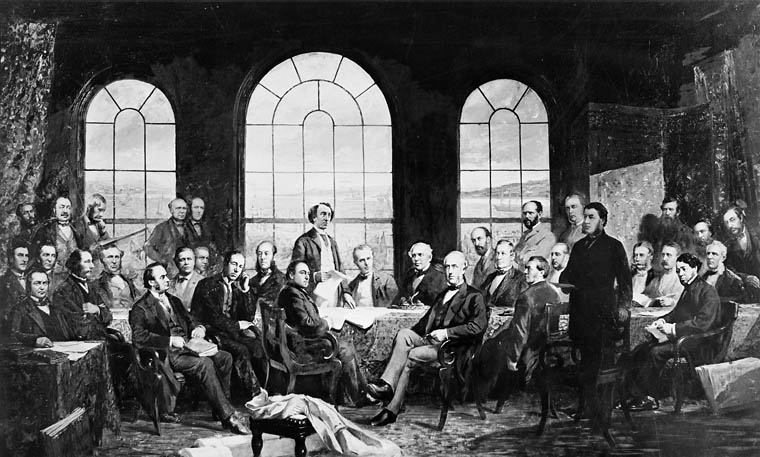
-
Macleans
PEI Bomber Sought
Marlene Stanton was unaccustomed to finding urgent stories in the daily mail, so she let the letters languish on her desk.This article was originally published in Maclean's Magazine on September 23, 1996
"https://thecanadianencyclopedia.ca/images/tce_placeholder.jpg?v=e9dca980c9bdb3aa11e832e7ea94f5d9" // resources/views/front/categories/view.blade.php
https://thecanadianencyclopedia.ca/images/tce_placeholder.jpg?v=e9dca980c9bdb3aa11e832e7ea94f5d9
-
Macleans
PEI Bombing Suspect Arrested
Divorced and living by himself in a drab Charlottetown apartment complex for the past 10 years, Roger Bell did not go out of his way to meet people. "He didn't say as much as hello," said John Acorn, Bell's next-door neighbor.This article was originally published in Maclean's Magazine on December 30, 1996
"https://thecanadianencyclopedia.ca/images/tce_placeholder.jpg?v=e9dca980c9bdb3aa11e832e7ea94f5d9" // resources/views/front/categories/view.blade.php
https://thecanadianencyclopedia.ca/images/tce_placeholder.jpg?v=e9dca980c9bdb3aa11e832e7ea94f5d9
-
Macleans
PEI Elects Tory Premier
Few political eras have begun in grander style. Twenty four hours after PRINCE EDWARD ISLAND's Conservatives ousted the Liberals in the Nov.This article was originally published in Maclean's Magazine on December 2, 1996
"https://thecanadianencyclopedia.ca/images/tce_placeholder.jpg?v=e9dca980c9bdb3aa11e832e7ea94f5d9" // resources/views/front/categories/view.blade.php
https://thecanadianencyclopedia.ca/images/tce_placeholder.jpg?v=e9dca980c9bdb3aa11e832e7ea94f5d9
-
Article
PEI Land Question
In 1767 the British government decided to allocate, prior to settlement, virtually all of PEI to proprietors who would become semifeudal resident landlords paying annual quitrents to the Crown to finance the cost of governing and colonizing the Island.
"https://thecanadianencyclopedia.ca/images/tce_placeholder.jpg?v=e9dca980c9bdb3aa11e832e7ea94f5d9" // resources/views/front/categories/view.blade.php
https://thecanadianencyclopedia.ca/images/tce_placeholder.jpg?v=e9dca980c9bdb3aa11e832e7ea94f5d9
-
Macleans
PEI's Fixed Link Opens
This article was originally published in Maclean’s magazine on June 2, 1997. Partner content is not updated.
"https://thecanadianencyclopedia.ca/images/tce_placeholder.jpg?v=e9dca980c9bdb3aa11e832e7ea94f5d9" // resources/views/front/categories/view.blade.php
https://thecanadianencyclopedia.ca/images/tce_placeholder.jpg?v=e9dca980c9bdb3aa11e832e7ea94f5d9
-
Article
Penetanguishene Treaty (No. 5)
The Penetanguishene Treaty of 1798 (also known as Treaty 5 in the Upper Canada treaties numbering system) was an early land agreement between First Nations and British authorities in Upper Canada (later Ontario). It was one of a series of Upper Canada Land Surrenders. The Penetanguishene Treaty encompasses land on Georgian Bay at the northern tip of the peninsula at present-day Penetanguishene, as well as an island in Penetanguishene harbour. The British wanted to establish a naval presence on Lake Huron before the Americans could and the purchase of land at Penetanguishene would allow this. The British also realized that they might have to evacuate their post at Michilimackinac some day and wanted an alternative location.
"https://d3d0lqu00lnqvz.cloudfront.net/PenetangTreaty5.jpg" // resources/views/front/categories/view.blade.php
https://d3d0lqu00lnqvz.cloudfront.net/PenetangTreaty5.jpg
-
Article
Pennefather Treaties
In the summer of 1859, Superintendent General of the Indian Department Richard T. Pennefather signed three separate but essentially identical treaties with Batchewana First Nation (Treaty 91 [A]), Garden River First Nation (Treaty 91 [B]) and Thessalon First Nation (Treaty 91 [C]). The three treaties were part of a series of land surrenders that occurred after the 1850 Robinson Treaties. The Pennefather treaties opened additional acres for settlement and resource exploitation. (See also Treaties with Indigenous Peoples in Canada.)
"https://d3d0lqu00lnqvz.cloudfront.net/media/new_article_images/Nebenaigoching/Chippewa_Indian_Chiefs_At_Montreal_1849_image.jpg" // resources/views/front/categories/view.blade.php
https://d3d0lqu00lnqvz.cloudfront.net/media/new_article_images/Nebenaigoching/Chippewa_Indian_Chiefs_At_Montreal_1849_image.jpg
-
Article
Percy Schmeiser
Percy Schmeiser, farmer, business owner, Saskatchewan MLA 1967–71, politician (born 5 January 1931 in Bruno, SK; died 13 October 2020). Farmer Percy Schmeiser was mayor of Bruno, Saskatchewan, from 1963 to 1982 and MLA for the riding of Watrous from 1967 to 1971. He is best known as the defendant in Schmeiser v. Monsanto, which was argued all the way to the Supreme Court of Canada. Monsanto, an American agrochemicals corporation, accused Schmeiser of illegally using their patented genetically modified seeds. Schmeiser claimed they had simply blown onto his farm. He became a folk hero for his stand against a large agricultural corporation and against the use of genetically modified organisms (GMOs) in agriculture. An advocate for environmental justice, farmers’ rights, and the right to save seeds, he received the Mahatma Gandhi Award and the Canadian Health Food Association Hall of Fame Award.
"https://d3d0lqu00lnqvz.cloudfront.net/media/media/dc2050ae-b79f-4f42-9cb0-d37a157abffa.jpg" // resources/views/front/categories/view.blade.php
https://d3d0lqu00lnqvz.cloudfront.net/media/media/dc2050ae-b79f-4f42-9cb0-d37a157abffa.jpg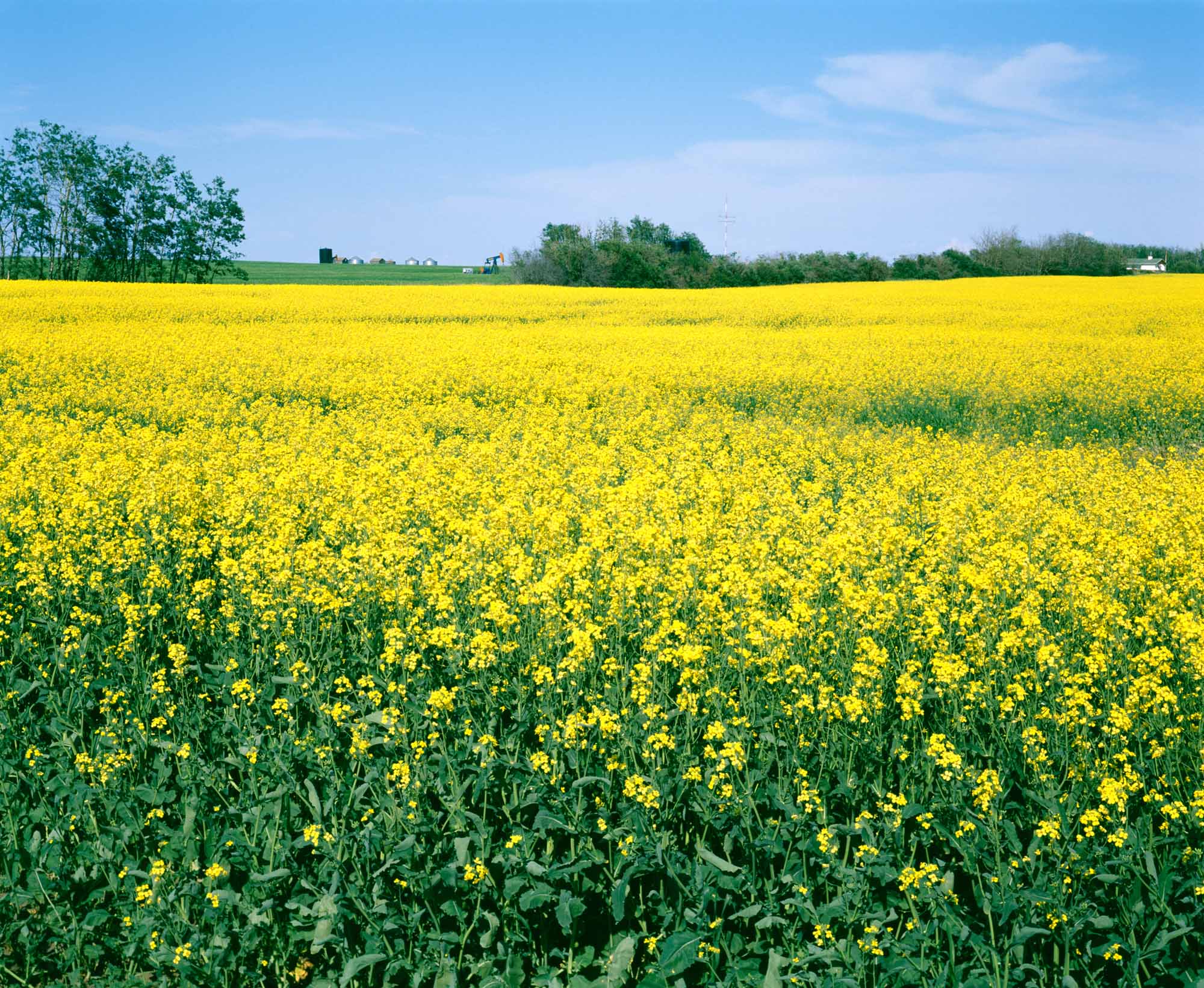
-
Article
Perjury
A witness in a judicial proceeding who knowingly gives false evidence with intent to mislead the judge or jury commits the crime of perjury. If a person knowingly makes a false statement under oath outside a judicial proceeding, he or she would also be guilty of an offence.
"https://thecanadianencyclopedia.ca/images/tce_placeholder.jpg?v=e9dca980c9bdb3aa11e832e7ea94f5d9" // resources/views/front/categories/view.blade.php
https://thecanadianencyclopedia.ca/images/tce_placeholder.jpg?v=e9dca980c9bdb3aa11e832e7ea94f5d9
-
Article
Permanent Joint Board on Defence
The Permanent Joint Board on Defence is a Canadian-American advisory body established at Ogdensburg, NY, 18 August 1940, by PM Mackenzie King and US President F.D. Roosevelt.
"https://thecanadianencyclopedia.ca/images/tce_placeholder.jpg?v=e9dca980c9bdb3aa11e832e7ea94f5d9" // resources/views/front/categories/view.blade.php
https://thecanadianencyclopedia.ca/images/tce_placeholder.jpg?v=e9dca980c9bdb3aa11e832e7ea94f5d9
-
Article
Persons Case
The Persons Case (Edwards v. A.G. of Canada) was a constitutional ruling that established the right of women to be appointed to the Senate. The case was initiated by the Famous Five, a group of prominent women activists. In 1928, the Supreme Court of Canada ruled that women were not “persons” according to the British North America Act (now called the Constitution Act, 1867). Therefore, they were ineligible for appointment to the Senate. However, the Judicial Committee of the Privy Council reversed the Court’s decision on 18 October 1929. The Persons Case enabled women to work for change in both the House of Commons and the Senate. It also meant that women could no longer be denied rights based on a narrow interpretation of the law.
"https://d3d0lqu00lnqvz.cloudfront.net/media/media/65699b89-06c0-4518-aa06-4eea43f2ec74.jpg" // resources/views/front/categories/view.blade.php
https://d3d0lqu00lnqvz.cloudfront.net/media/media/65699b89-06c0-4518-aa06-4eea43f2ec74.jpg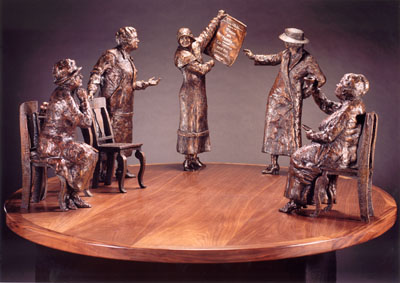
-
Article
Persons Case (Plain-Language Summary)
The Persons Case was a constitutional ruling. It established the right of women to serve in the Senate. The case was started by the Famous Five. They were a group of women activists. In 1928, they objected to a Supreme Court of Canada ruling that women were not “persons.” As such, they were not allowed to serve in the Senate. The Famous Five challenged the law. In 1929, the decision was reversed. As a result, women were legally recognized as “persons.” They could no longer be denied rights based on a narrow reading of the law. (This article is a plain-language summary of the Persons Case. If you are interested in reading about this topic in more depth, please see the full-length entry.)
"https://d3d0lqu00lnqvz.cloudfront.net/media/media/65699b89-06c0-4518-aa06-4eea43f2ec74.jpg" // resources/views/front/categories/view.blade.php
https://d3d0lqu00lnqvz.cloudfront.net/media/media/65699b89-06c0-4518-aa06-4eea43f2ec74.jpg
-
Article
Petitioning in Canada
Petitioning is one of the most common tools of political protest accessible to the local population. Limited during the era of New France, the practice of collectively petitioning political authorities became much more frequent in the years following the Conquest by the British. Sanctioned in the 1689 Bill of Rights, petitioning had been a common practice in Britain for centuries, and ever since 1763, Canadians have been sending petitions to their governments (colonial, imperial, federal, provincial, and municipal) for a variety of reasons. With the recent introduction of e-petition, Canadians, more than ever, can have their voices heard in government.
"https://d3d0lqu00lnqvz.cloudfront.net/media/media/7770f93e-7f5e-4cb8-b6ad-57df24227db6.jpg" // resources/views/front/categories/view.blade.php
https://d3d0lqu00lnqvz.cloudfront.net/media/media/7770f93e-7f5e-4cb8-b6ad-57df24227db6.jpg