
Browse "Nature & Geography"
-
Article
Nematoda
Nematoda are a phylum of unsegmented, cylindrical worms; approximately 30 000 species are known.
"https://d3d0lqu00lnqvz.cloudfront.net/media/media/e2c984dd-2472-47a7-bf74-ba5a722f3708.jpg" // resources/views/front/categories/view.blade.php
https://d3d0lqu00lnqvz.cloudfront.net/media/media/e2c984dd-2472-47a7-bf74-ba5a722f3708.jpg
-
Article
Nepheline Syenite
Nepheline syenite is a white to light grey medium-grained IGNEOUS ROCK. It consists mostly of soda feldspar, nepheline and potash feldspar, accessory magnesium and iron-rich minerals.
"https://thecanadianencyclopedia.ca/images/tce_placeholder.jpg?v=e9dca980c9bdb3aa11e832e7ea94f5d9" // resources/views/front/categories/view.blade.php
https://thecanadianencyclopedia.ca/images/tce_placeholder.jpg?v=e9dca980c9bdb3aa11e832e7ea94f5d9
-
Article
Nickel
The major contemporary use for nickel is as an alloying agent. Nickel is present in some 3000 different alloys that are used in more than 250 000 end-use applications. The most popular alloy in which nickel is used is stainless steel (seeIRON AND STEEL INDUSTRY).
"https://d3d0lqu00lnqvz.cloudfront.net/media/media/cfafc49e-d0f9-4512-ab8e-9ccdab8fbada.jpg" // resources/views/front/categories/view.blade.php
https://d3d0lqu00lnqvz.cloudfront.net/media/media/cfafc49e-d0f9-4512-ab8e-9ccdab8fbada.jpg
-
"https://d3d0lqu00lnqvz.cloudfront.net/birdclassification/common-nighthawk.jpg" // resources/views/front/categories/view.blade.php
https://d3d0lqu00lnqvz.cloudfront.net/birdclassification/common-nighthawk.jpg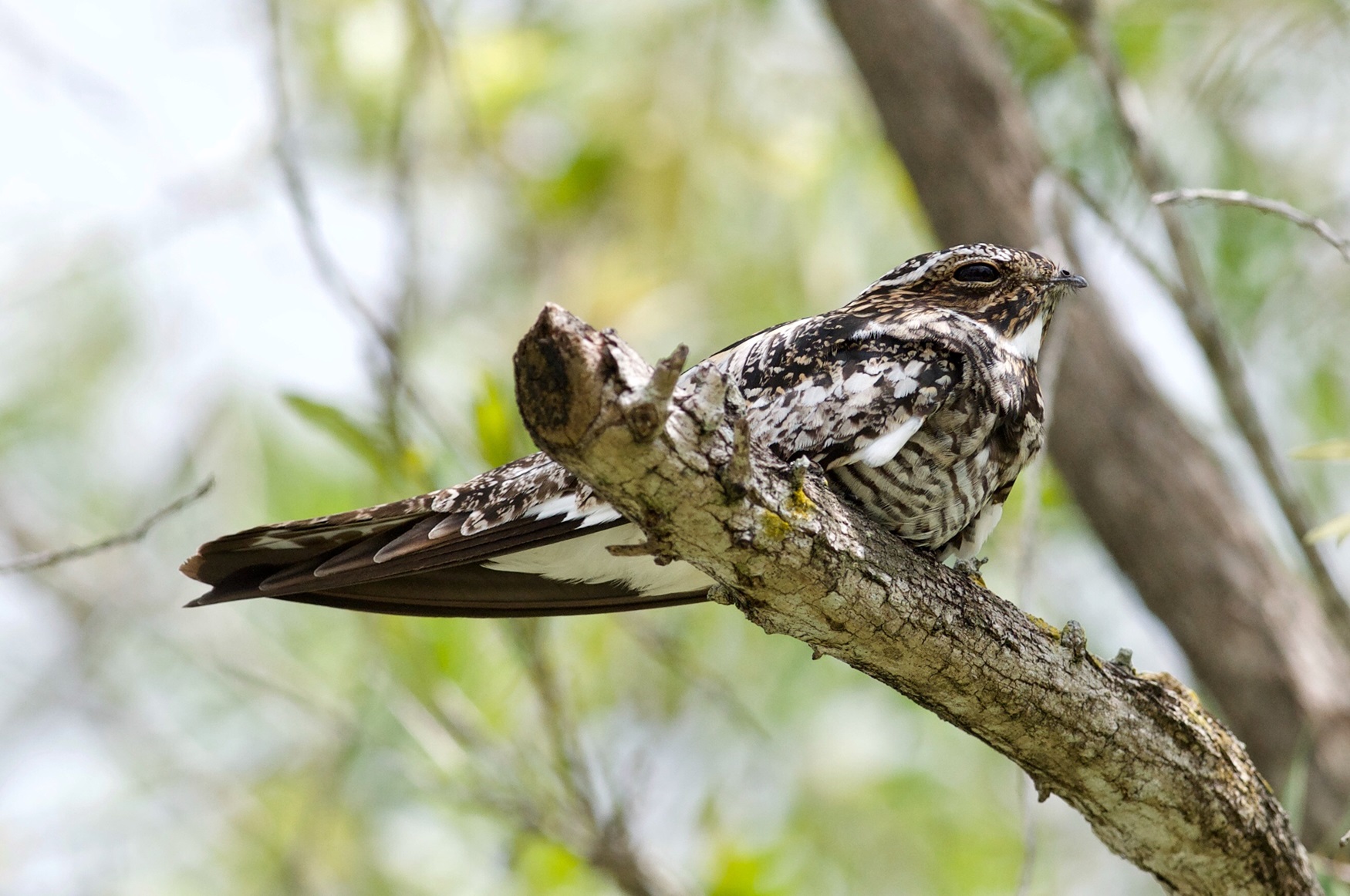
-
Article
Nightshade
Eight species of Solanum occur in Canada, of which only S. carolinense (horse or ball nettle), found in southern Ontario, is native. The most familiar nightshade found across Canada is S. dulcamara (climbing nightshade or European bittersweet).
"https://thecanadianencyclopedia.ca/images/tce_placeholder.jpg?v=e9dca980c9bdb3aa11e832e7ea94f5d9" // resources/views/front/categories/view.blade.php
https://thecanadianencyclopedia.ca/images/tce_placeholder.jpg?v=e9dca980c9bdb3aa11e832e7ea94f5d9
-
Article
North American Racer
The North American racer (Coluber constrictor) is a non-venomous snake that is native to North America. It has an extensive geographic range that extends from southern Canada south throughout most of the United States, parts of Mexico and into Guatemala and Belize. Eleven subspecies are recognized across this species’ range, three of which are found in Canada: the blue racer (Coluber constrictor foxii; ON), the Eastern yellow-bellied racer (Coluber constrictor flaviventris; SK, AB) and the Western yellow-bellied racer (Coluber constrictor Mormon; BC). (See also Snake Species in Canada.)
"https://d3d0lqu00lnqvz.cloudfront.net/NorthAmericanRacer/BlueRacer.jpg" // resources/views/front/categories/view.blade.php
https://d3d0lqu00lnqvz.cloudfront.net/NorthAmericanRacer/BlueRacer.jpg
-
Article
North-West Territories (1870–1905)
The North-West Territories was the first Canadian territory. It was Established on 15 July 1870. As a territory, the region became part of Canada. But it lacked the population, economic and infrastructure resources to attain provincial status. It thus fell under the jurisdiction of the federal government. It covered a vast area, stretching west from a disputed boundary with Labrador, across the northern portions of present-day Quebec and Ontario, through the Prairies to British Columbia, and north from the 49th parallel to the Arctic Ocean. The territory was subject to numerous boundary changes before 1905. At that time, the provinces of Saskatchewan and Alberta were carved out of the southwest portion of the region. In 1906, the remaining territory was renamed the Northwest Territories.
"https://d3d0lqu00lnqvz.cloudfront.net/media/media/1ca2e02a-e2e8-4709-acee-5581d6051d5c.jpg" // resources/views/front/categories/view.blade.php
https://d3d0lqu00lnqvz.cloudfront.net/media/media/1ca2e02a-e2e8-4709-acee-5581d6051d5c.jpg
-
Article
Northern Gateway Pipeline Proposal
The $7.9 billion Northern Gateway project was a pipeline proposal that Enbridge put forward in 2008. Northern Gateway would have carried diluted bitumen (“dilbit”) about 1,170 km from Bruderheim, Alberta to a terminal on the Pacific Ocean at Kitimat, British Columbia. Enbridge claimed that the project would create $1.2 billion in tax revenue for BC, as well as 560 jobs. The Federal Court of Appeal overturned the pipeline’s approval in 2016. That same year, the Liberal government of Prime Minister Justin Trudeau rejected the project.
"https://d3d0lqu00lnqvz.cloudfront.net/media/media/de50644a-0b88-4e0a-991b-a6c9222e3c29.jpg" // resources/views/front/categories/view.blade.php
https://d3d0lqu00lnqvz.cloudfront.net/media/media/de50644a-0b88-4e0a-991b-a6c9222e3c29.jpg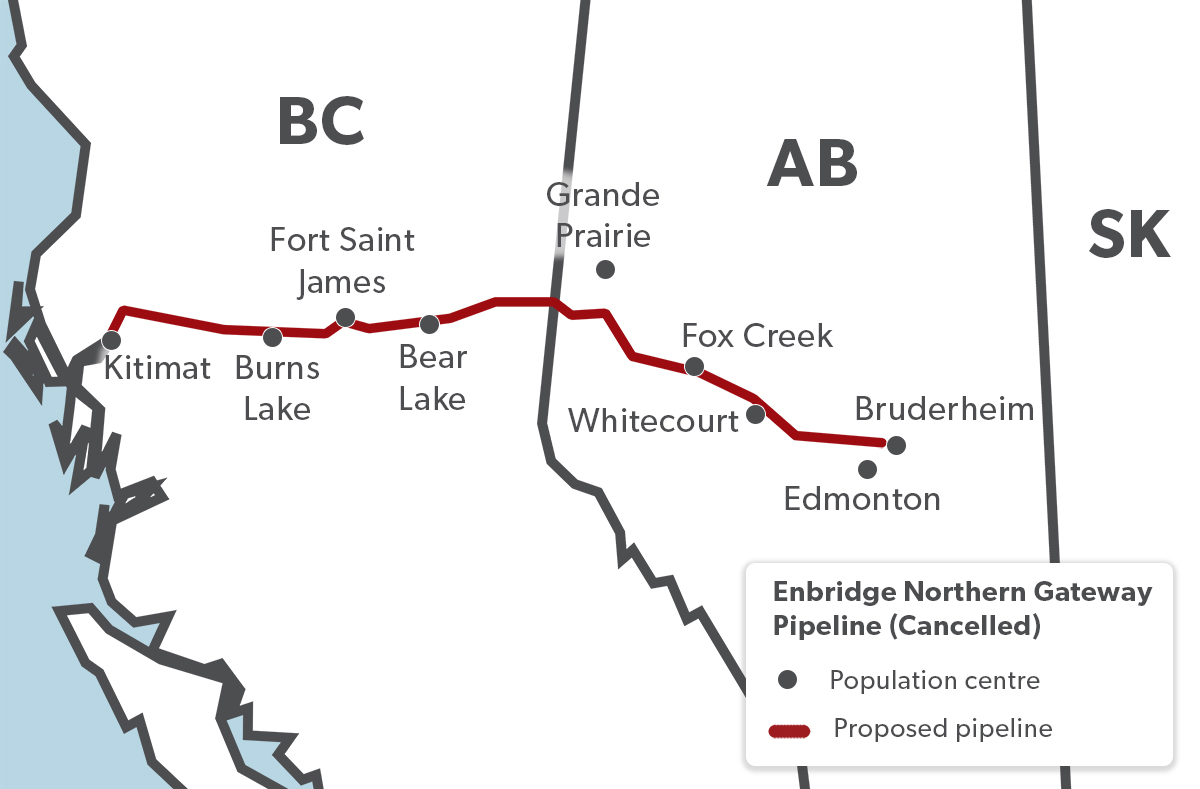
-
Article
Northern Leopard Frog
The Northern leopard frog (Lithobates pipiens, previously Rana pipiens) is a green or brown frog covered in large, distinct spots. In Canada, three populations exist: the Eastern population, the Western Boreal/Prairie population and the Rocky Mountain population. The Committee on the Status of Endangered Wildlife in Canada characterizes the Western Boreal/Prairie and Rocky Mountain populations as special concern and endangered, respectively. The Eastern population is considered widespread and abundant, although the population has shown evidence of decline.
"https://d3d0lqu00lnqvz.cloudfront.net/northernleopardfrog/Crowley-Northern-Leopard-Frog-Lithobates-pipiens-1.jpg" // resources/views/front/categories/view.blade.php
https://d3d0lqu00lnqvz.cloudfront.net/northernleopardfrog/Crowley-Northern-Leopard-Frog-Lithobates-pipiens-1.jpg
-
Editorial
Not for Saps: Tree Planting in Alberta
Over a century’s worth of shifting environmental policy means that today, maintaining Canada’s forests is as important as cutting them down. Tree planting is an essential part of this maintenance, and each year thousands of young Canadians trek through rough conditions and remote areas to replant thousands of trees.
"https://d3d0lqu00lnqvz.cloudfront.net/media/media/3f6e30bf-0cc6-47cd-8961-1918b0dae744.jpg" // resources/views/front/categories/view.blade.php
https://d3d0lqu00lnqvz.cloudfront.net/media/media/3f6e30bf-0cc6-47cd-8961-1918b0dae744.jpg
-
Article
Oats
Oats (Avena sativa), member of the grass family (Gramineae), are grown for cereal grains.
"https://d3d0lqu00lnqvz.cloudfront.net/media/media/05d93051-ce06-4c9a-8160-1b469bf5192f.jpg" // resources/views/front/categories/view.blade.php
https://d3d0lqu00lnqvz.cloudfront.net/media/media/05d93051-ce06-4c9a-8160-1b469bf5192f.jpg
-
Article
Ocean Current
An ocean current is a large (100 km or more), mostly permanent, horizontal movement of water at all depths in the oceans. Currents are generated by winds, excessive cooling or evaporation at the ocean surface (thermohaline processes) and tidal forces.
"https://d3d0lqu00lnqvz.cloudfront.net/media/media/4bc5b21a-e673-4f22-9e76-db46b45d42b6.jpg" // resources/views/front/categories/view.blade.php
https://d3d0lqu00lnqvz.cloudfront.net/media/media/4bc5b21a-e673-4f22-9e76-db46b45d42b6.jpg
-
Article
Octopus
Octopus is the common name for all 8-armed cephalopod molluscs; it more properly refers to the largest genus in order Octopoda (over 100 species).
"https://thecanadianencyclopedia.ca/images/tce_placeholder.jpg?v=e9dca980c9bdb3aa11e832e7ea94f5d9" // resources/views/front/categories/view.blade.php
https://thecanadianencyclopedia.ca/images/tce_placeholder.jpg?v=e9dca980c9bdb3aa11e832e7ea94f5d9
-
Article
Oilseed Crops
Oilseed Crops are grown primarily for the oil contained in the seeds. The oil content of small grains (eg, wheat) is only 1-2%; that of oilseeds ranges from about 20% for soybeans to over 40% for sunflowers and rapeseed (canola).
"https://d3d0lqu00lnqvz.cloudfront.net/media/media/dc2050ae-b79f-4f42-9cb0-d37a157abffa.jpg" // resources/views/front/categories/view.blade.php
https://d3d0lqu00lnqvz.cloudfront.net/media/media/dc2050ae-b79f-4f42-9cb0-d37a157abffa.jpg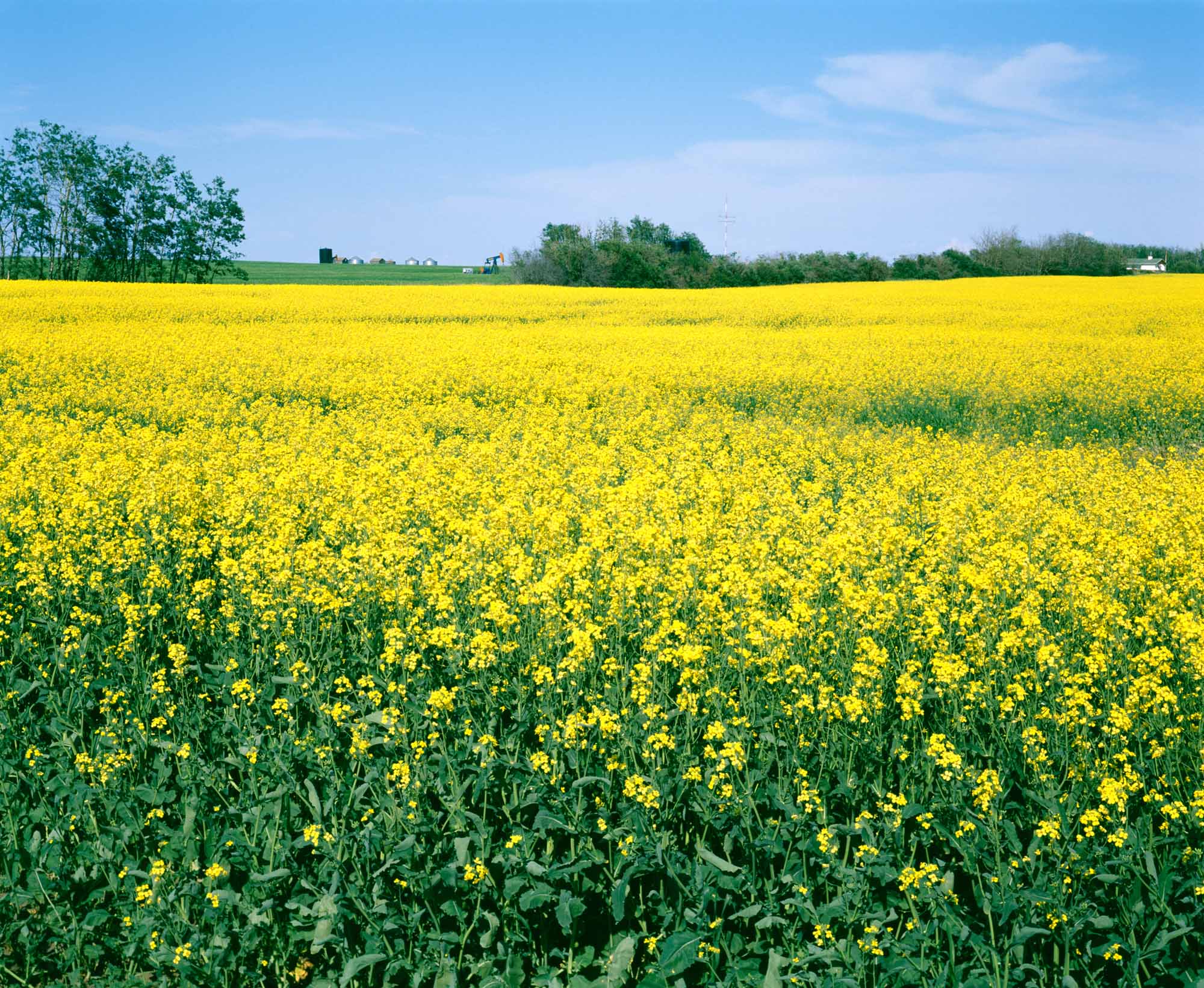
-
Article
Old-Growth Forests in Canada
Old-growth forests are complex forest ecosystems that have developed over a long period of time without experiencing any major disturbances. They have unique features and significant ecological, social, cultural and economic value. Old-growth forests used to be a significant part of Canada’s forest landscape but now only exist as small, fragmented patches due to intensive logging (see Forest Harvesting), conversion of forest for agriculture, insect epidemics (see Four Major Insect Pests of Forests in Canada), wildfires and disease. Increasing measures to protect these ecosystems are being implemented across Canada to combat their continued decline.
"https://d3d0lqu00lnqvz.cloudfront.net/oldgrowthforests/lady-slippers.jpg" // resources/views/front/categories/view.blade.php
https://d3d0lqu00lnqvz.cloudfront.net/oldgrowthforests/lady-slippers.jpg