
Browse "History"
-
Macleans
Quebec Strategy Suffers Setback
It was the moment when a bad week for the Liberal government's Quebec strategy got worse.This article was originally published in Maclean's Magazine on March 2, 1998
"https://thecanadianencyclopedia.ca/images/tce_placeholder.jpg?v=e9dca980c9bdb3aa11e832e7ea94f5d9" // resources/views/front/categories/view.blade.php
https://thecanadianencyclopedia.ca/images/tce_placeholder.jpg?v=e9dca980c9bdb3aa11e832e7ea94f5d9
-
Editorial
Quebec's 400th Anniversary
The following article is an editorial written by The Canadian Encyclopedia staff. Editorials are not usually updated.
"https://d3d0lqu00lnqvz.cloudfront.net/media/media/13a67c95-5fb2-4449-8e79-1a42d810c1c7.jpg" // resources/views/front/categories/view.blade.php
https://d3d0lqu00lnqvz.cloudfront.net/media/media/13a67c95-5fb2-4449-8e79-1a42d810c1c7.jpg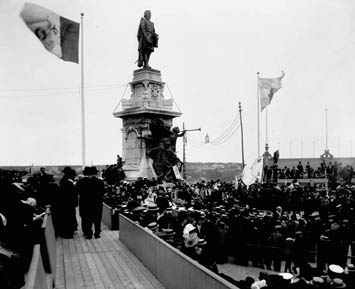
-
Article
Québec's Motto
On the plans which he had prepared for the construction of the Hôtel du Parlement de Québec (Québec's parliament buildings), Eugène-Étienne Taché took the initiative to inscribe, under the provincial coat of arms above the main door, a MOTTO of his own invention: Je me souviens (I remember).
"https://thecanadianencyclopedia.ca/images/tce_placeholder.jpg?v=e9dca980c9bdb3aa11e832e7ea94f5d9" // resources/views/front/categories/view.blade.php
https://thecanadianencyclopedia.ca/images/tce_placeholder.jpg?v=e9dca980c9bdb3aa11e832e7ea94f5d9
-
Article
Queen Victoria’s Diamond Jubilee – 1897
Queen Victoria (who reigned from 1837–1901) celebrated 60 years on the throne in 1897. Celebrations to honour the grand occasion — the first Diamond Jubilee — showcased the Queen’s role as “mother” of the British Empire and its Dominions, including Canada.
"https://d3d0lqu00lnqvz.cloudfront.net/media/media/df5c8ead-ea1c-4fb8-a956-b618aa0ad884.jpg" // resources/views/front/categories/view.blade.php
https://d3d0lqu00lnqvz.cloudfront.net/media/media/df5c8ead-ea1c-4fb8-a956-b618aa0ad884.jpg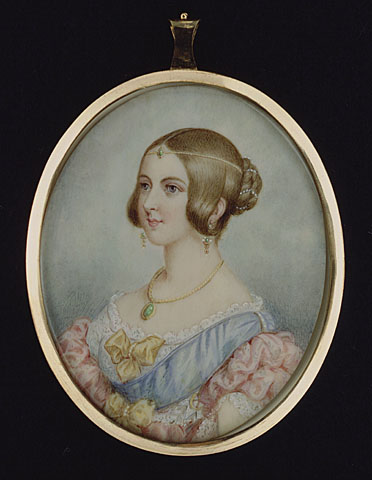
-
Article
Quidi Vidi Battery
The Quidi Vidi Battery was built in 1762 by the French. The French attacked the ST JOHN'S, Nfld, area in one of the last campaigns of the SEVEN YEARS' WAR, capturing and burning many settlements around Trinity and Conception bays. They then erected the battery to defend their newly won territory.
"https://thecanadianencyclopedia.ca/images/tce_placeholder.jpg?v=e9dca980c9bdb3aa11e832e7ea94f5d9" // resources/views/front/categories/view.blade.php
https://thecanadianencyclopedia.ca/images/tce_placeholder.jpg?v=e9dca980c9bdb3aa11e832e7ea94f5d9
-
Article
Railway Disasters
Railway accidents may result from a number of situations, including improper track beds, metal fatigue, fire, flawed rails, human error and frail bridges.
"https://d3d0lqu00lnqvz.cloudfront.net/media/new_article_images/Lac-Mégantic_Rail_Disaster/Aerial view.jpg" // resources/views/front/categories/view.blade.php
https://d3d0lqu00lnqvz.cloudfront.net/media/new_article_images/Lac-Mégantic_Rail_Disaster/Aerial view.jpg
-
Article
HMCS Rainbow
His Majesty’s Canadian Ship (HMCS) Rainbow was an Apollo-class cruiser that was commissioned into Britain’s Royal Navy in 1893. In 1910, Britain sold the vessel to Canada, where it became one of the first two warships of the newly formed Naval Service of Canada. Rainbow served 10 years in the Canadian navy, including throughout the First World War. It was sold for scrap in 1920.
"https://d3d0lqu00lnqvz.cloudfront.net/HMS-Shearwater_HMCS-Rainbow.jpg" // resources/views/front/categories/view.blade.php
https://d3d0lqu00lnqvz.cloudfront.net/HMS-Shearwater_HMCS-Rainbow.jpg
-
Article
Ranching History
Fort Macleod was the first cattle town in the Canadian West. Early ranching was centered around the headquarters of the North West Mounted Police (courtesy Glenbow Archives).A round-up in Alberta's ranching country (photo by Angus McNee, courtesy Take Stock Photography Inc.).Photo by Notman & Son (courtesy Library and Archives Canada/C-8812).Fall roundup: lead man John Thompson herding cattle back to ranches, Alberta, October 1975 (photo by Ted Grant/courtesy Library and Archives Canada/PA-142584).PreviousNext Ranching History Ranching developed...
"https://d3d0lqu00lnqvz.cloudfront.net/media/media/b19803e4-0d66-4fe8-a70c-4cc10b995793.jpg" // resources/views/front/categories/view.blade.php
https://d3d0lqu00lnqvz.cloudfront.net/media/media/b19803e4-0d66-4fe8-a70c-4cc10b995793.jpg
-
Article
RCAF Blackouts
RCAF Blackouts. Entertainment troupe, one of several organized during World War II by air force personnel.
"https://thecanadianencyclopedia.ca/images/tce_placeholder.jpg?v=e9dca980c9bdb3aa11e832e7ea94f5d9" // resources/views/front/categories/view.blade.php
https://thecanadianencyclopedia.ca/images/tce_placeholder.jpg?v=e9dca980c9bdb3aa11e832e7ea94f5d9
-
Macleans
RCMP Recreates Historic March
Growing up in the small town of Hartney in the southwest corner of Manitoba, Grant Little believed that the Royal Canadian Mounted Police "hung the moon.This article was originally published in Maclean's Magazine on July 12, 1999
"https://thecanadianencyclopedia.ca/images/tce_placeholder.jpg?v=e9dca980c9bdb3aa11e832e7ea94f5d9" // resources/views/front/categories/view.blade.php
https://thecanadianencyclopedia.ca/images/tce_placeholder.jpg?v=e9dca980c9bdb3aa11e832e7ea94f5d9
-
Article
Rebellion in Lower Canada (The Patriots' War)
In 1837 and 1838, French Canadian militants in Lower Canada took up arms against the British Crown in a pair of insurrections. The twin rebellions killed more than 300 people. They followed years of tensions between the colony’s anglophone minority and the growing, nationalistic aspirations of its francophone majority. The rebels failed in their campaign against British rule. However, their revolt led to political reform, including the unified Province of Canada and the introduction of responsible government. The rebellion in Lower Canada, which is also known as the Patriots' War (la Guerre des patriotes), also gave French Canadians one of their first nationalist heroes in Louis-Joseph Papineau.
"https://d3d0lqu00lnqvz.cloudfront.net/media/media/37aadc48-3f88-4946-a9aa-0d2ad30495cd.jpg" // resources/views/front/categories/view.blade.php
https://d3d0lqu00lnqvz.cloudfront.net/media/media/37aadc48-3f88-4946-a9aa-0d2ad30495cd.jpg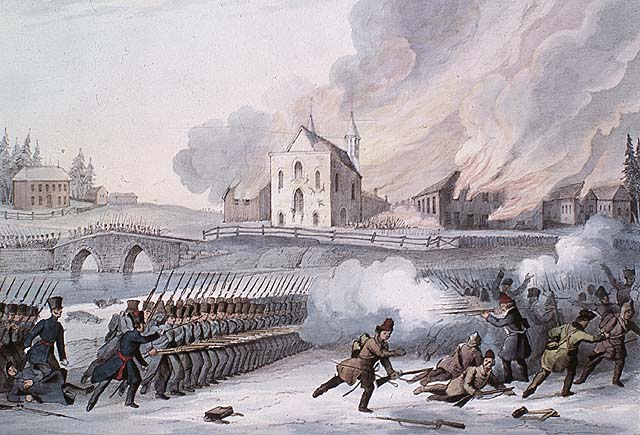
-
Article
Rebellion Losses Bill
Rebellion Losses Bill, modelled on Upper Canadian legislation, was introduced by Louis LaFontaine in Feb 1849 to compensate Lower Canadians whose property had been damaged during the Rebellions of 1837-38 (totalling approximately £100,000).
"https://thecanadianencyclopedia.ca/images/tce_placeholder.jpg?v=e9dca980c9bdb3aa11e832e7ea94f5d9" // resources/views/front/categories/view.blade.php
https://thecanadianencyclopedia.ca/images/tce_placeholder.jpg?v=e9dca980c9bdb3aa11e832e7ea94f5d9
-
Article
Rebellions of 1837–38 (Plain-Language Summary)
In 1837 and 1838, insurgents in Upper and Lower Canada led armed rebellions against the Crown. The two uprisings left 325 people dead. The revolt in Lower Canada was more serious and violent than the rebellion in Upper Canada. The events of 1837 led to the Durham Report (1839). It led to the Act of Union in 1841. The Act merged the two colonies into the Province of Canada. It also led to responsible government. These were important steps in Canada’s path to becoming a country. This article is a plain-language summary of the Rebellions of 1837–38. If you would like to read about this topic in more depth, please see our full-length entry: Rebellions of 1837–38.
"https://d3d0lqu00lnqvz.cloudfront.net/media/media/e6a801ef-a427-4be1-b758-2bd5f812d3b8.jpg" // resources/views/front/categories/view.blade.php
https://d3d0lqu00lnqvz.cloudfront.net/media/media/e6a801ef-a427-4be1-b758-2bd5f812d3b8.jpg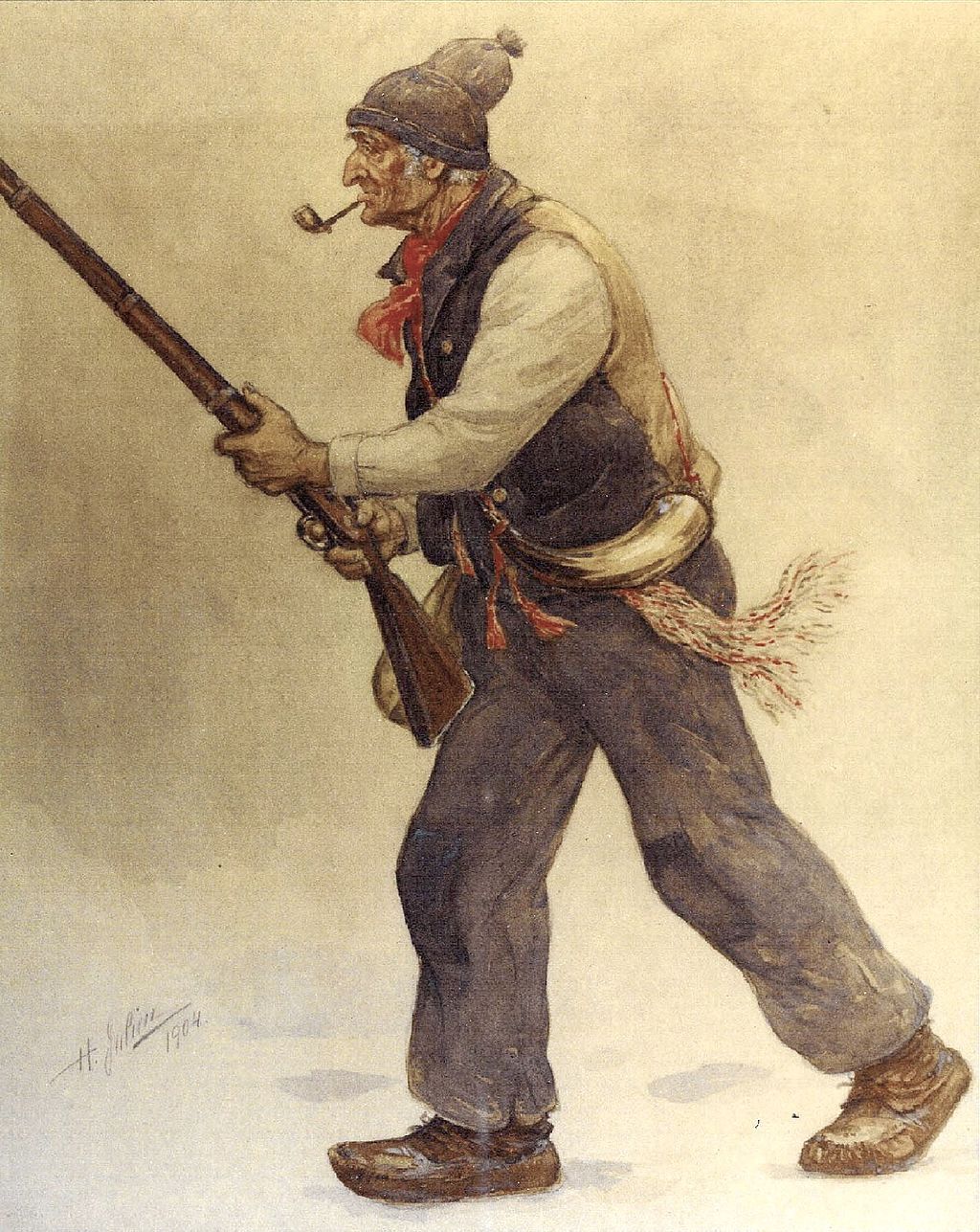
-
Article
Reciprocity
Reciprocity was a free trade agreement between the United States and Canada. It mutually reduced import duties and protective tariffs on certain goods exchanged between the two countries. It was in effect from 1854 to 1866 and was controversial at times on both sides of the border. It was replaced in 1878 by the Conservative Party’s protectionist National Policy. It involved levying tariffs on imported goods to shield Canadian manufacturers from American competition. A narrower reciprocity agreement was introduced in 1935 and expanded in 1938. However, it was suspended in 1948 after both countries signed the General Agreement on Tariffs and Trade (GATT).
"https://d3d0lqu00lnqvz.cloudfront.net/media/media/f8f2bab3-d387-4165-9fbc-617c30019b95.jpg" // resources/views/front/categories/view.blade.php
https://d3d0lqu00lnqvz.cloudfront.net/media/media/f8f2bab3-d387-4165-9fbc-617c30019b95.jpg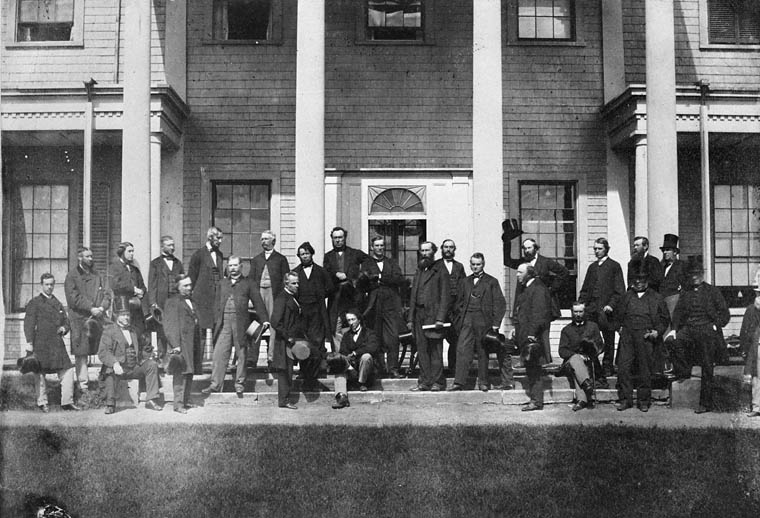
-
Article
Reconstruction
Reconstruction is the process of readjustment to a peacetime economy following WWII. Many believed the end of the war would mean a return to the economic depression of the 1930s, with falling production and widespread unemployment.
"https://d3d0lqu00lnqvz.cloudfront.net/media/media/5b52b570-6e9b-476a-94a9-af4ca135ac51.jpg" // resources/views/front/categories/view.blade.php
https://d3d0lqu00lnqvz.cloudfront.net/media/media/5b52b570-6e9b-476a-94a9-af4ca135ac51.jpg