
Browse "Places"
-
Article
Grand Portage
Grand Portage was a fur-trade depot and route of the voyageurs at the western extremity of Lake Superior.
"https://d3d0lqu00lnqvz.cloudfront.net/media/media/a4d6e476-5e53-4126-9ee6-313b64235660.jpg" // resources/views/front/categories/view.blade.php
https://d3d0lqu00lnqvz.cloudfront.net/media/media/a4d6e476-5e53-4126-9ee6-313b64235660.jpg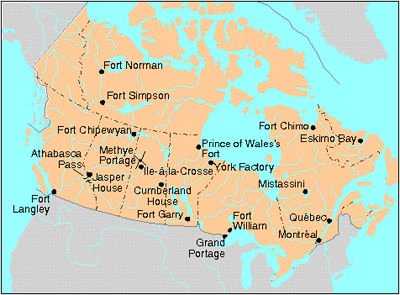
-
Article
Grand River
From its source just south of Georgian Bay, the Grand River winds 266 km to Lake Erie, dropping 352 m along the way. Together with its major tributaries, the Speed, Nith, Conestogo and Eramosa rivers, it drains 6200 km2, the largest watershed in southern Ontario.
"https://thecanadianencyclopedia.ca/images/tce_placeholder.jpg?v=e9dca980c9bdb3aa11e832e7ea94f5d9" // resources/views/front/categories/view.blade.php
https://thecanadianencyclopedia.ca/images/tce_placeholder.jpg?v=e9dca980c9bdb3aa11e832e7ea94f5d9
-
Article
Grand Theatre (London)
The original Grand Opera House opened amid a strong amateur and professional theatrical tradition on 8 September 1881 in the upper floors of the Masonic Temple in London, Ontario. At its peak in the 1890s, the 2,070-seat Grand was host to 100 companies and 300 performances annually. World-renowned artists, including Sarah Bernhardt, Lily Langtry and Ellen Terry and Canadians Clara Morris, Emma Albani and Henry Miller, performed in the classical melodramas of the time.
"https://d3d0lqu00lnqvz.cloudfront.net/Grand_Theatre_20120901_142842.jpg" // resources/views/front/categories/view.blade.php
https://d3d0lqu00lnqvz.cloudfront.net/Grand_Theatre_20120901_142842.jpg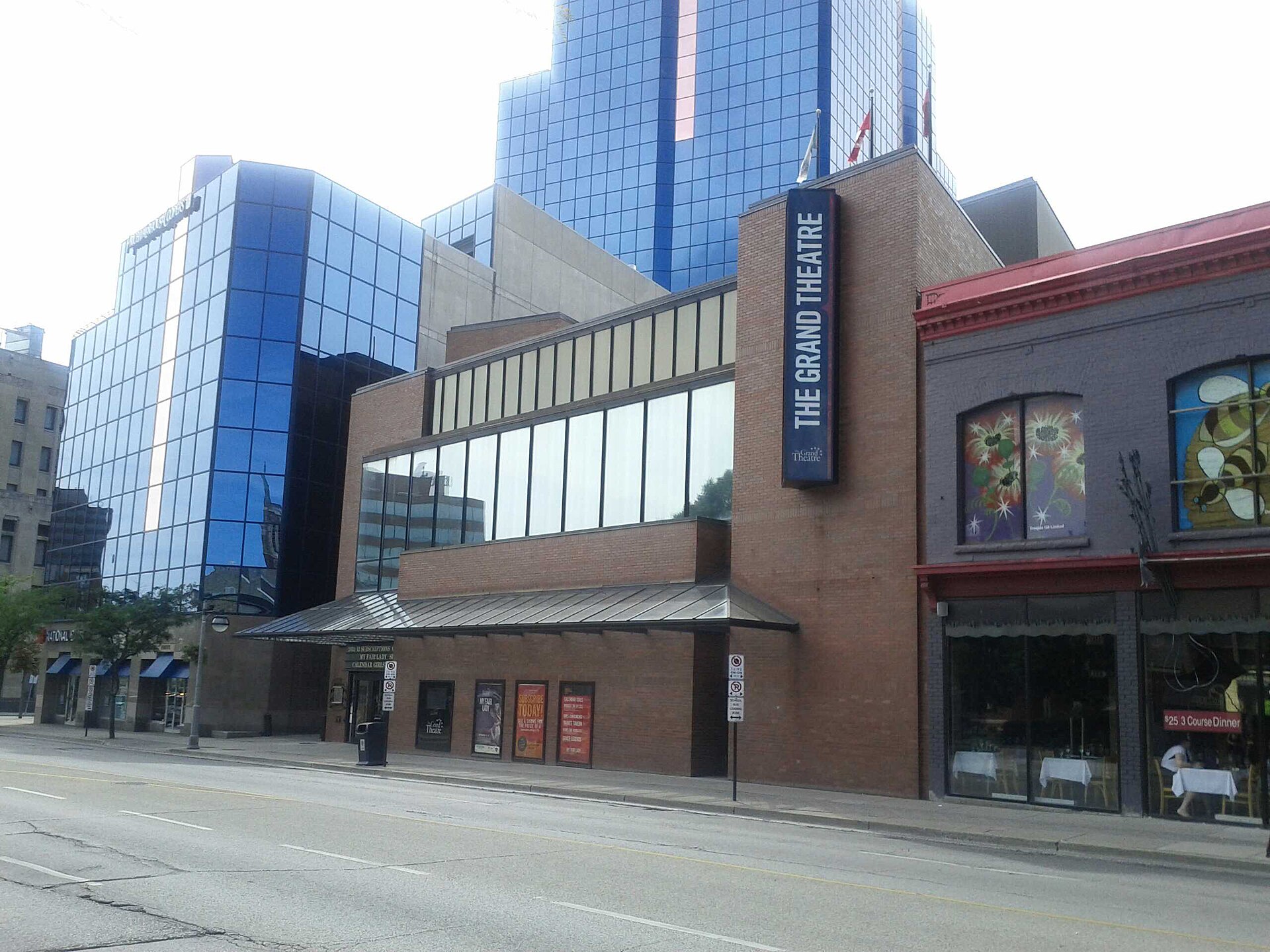
-
Article
Grand Théâtre de Québec
Grand Théâtre de Québec. A building complex devoted to the performing arts, located in Quebec City at the corner of Claire-Fontaine St and René Lévesque Blvd E.
"https://thecanadianencyclopedia.ca/images/tce_placeholder.jpg?v=e9dca980c9bdb3aa11e832e7ea94f5d9" // resources/views/front/categories/view.blade.php
https://thecanadianencyclopedia.ca/images/tce_placeholder.jpg?v=e9dca980c9bdb3aa11e832e7ea94f5d9
-
Article
Grand Theatre (Kingston)
The Grand Theatre in Kingston, Ontario, was originally the Grand Opera House, built 1901–02 on the site of Martin's Opera House (1879). H.M.S. Parliament and the premiere of Leo, the Royal Cadet were given at Martin's Opera House, which also saw visits from John Philip Sousa, Oscar Wilde and others before it was destroyed by fire on 6 December 1898. The Grand opened on 14 January 1902 and was bought in 1905 by Ambrose J. Small, a theatre-chain owner who had been influential in its original planning. Bernhardt, Melba, and Jolson performed there.
"https://d3d0lqu00lnqvz.cloudfront.net/Leo_the_Royal_Cadet_Grand_Theatre_Kingston_Jun_35_1915-1.jpg" // resources/views/front/categories/view.blade.php
https://d3d0lqu00lnqvz.cloudfront.net/Leo_the_Royal_Cadet_Grand_Theatre_Kingston_Jun_35_1915-1.jpg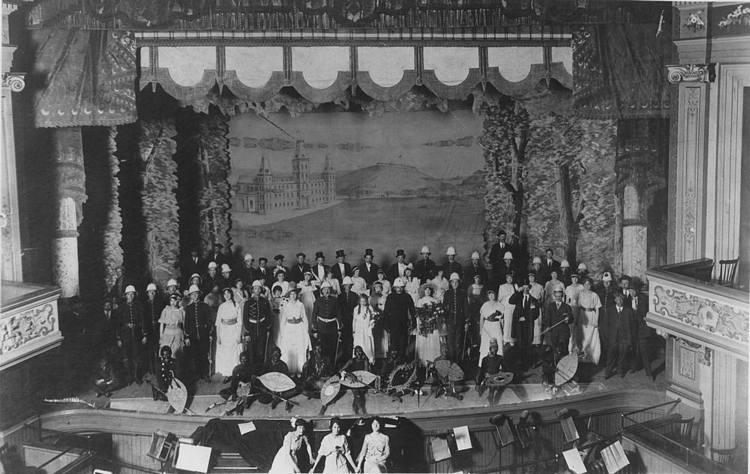
-
Article
Grand Trunk Pacific Railway
The Grand Trunk Pacific Railway was a 4800 km system whose main line ran from Winnipeg via Melville and Edmonton to Prince Rupert, British Columbia.
"https://thecanadianencyclopedia.ca/images/tce_placeholder.jpg?v=e9dca980c9bdb3aa11e832e7ea94f5d9" // resources/views/front/categories/view.blade.php
https://thecanadianencyclopedia.ca/images/tce_placeholder.jpg?v=e9dca980c9bdb3aa11e832e7ea94f5d9
-
Article
Grand Trunk Railway of Canada
In late 19th Century, the Grand Trunk Railway of Canada was the major railroad in the Province of Canada (Ontario and Quebec), connecting Toronto to Montreal.
"https://d3d0lqu00lnqvz.cloudfront.net/media/media/f2fd266e-b4d2-42a3-8d88-e6e4166b1541.jpg" // resources/views/front/categories/view.blade.php
https://d3d0lqu00lnqvz.cloudfront.net/media/media/f2fd266e-b4d2-42a3-8d88-e6e4166b1541.jpg
-
Article
Grande Cache
Grande Cache, Alta, incorporated as a town in 1983, population 4319 (2011c), 3783 (2006c). The Town of Grande Cache is located 430 km northwest of Edmonton, on a mountain plateau near the confluence of the Smoky and Sulphur rivers.
"https://thecanadianencyclopedia.ca/images/tce_placeholder.jpg?v=e9dca980c9bdb3aa11e832e7ea94f5d9" // resources/views/front/categories/view.blade.php
https://thecanadianencyclopedia.ca/images/tce_placeholder.jpg?v=e9dca980c9bdb3aa11e832e7ea94f5d9
-
Article
Grande-Île
This rural municipality has become a residential suburb of Valleyfield and of Greater Montréal. Its population nearly doubled from 1981 to 1996. Even though manufacturing and construction industries play a major role in the local economy, agriculture is still prominent.
"https://d3d0lqu00lnqvz.cloudfront.net/media/media/a9d99302-7475-4efc-9f79-322316675713.jpg" // resources/views/front/categories/view.blade.php
https://d3d0lqu00lnqvz.cloudfront.net/media/media/a9d99302-7475-4efc-9f79-322316675713.jpg
-
Article
Grande Prairie
Grande Prairie, Alberta, incorporated as a city in 1958, population 64,141 (2021 census), 63,166 (2016 census). The city of Grande Prairie is located 456 km northwest of Edmonton and takes its name from the large prairie that lies to the east, north and west of it. The city is the business and transportation centre of Alberta’s Peace River region.
"https://d3d0lqu00lnqvz.cloudfront.net/media/media/582cc550-9a41-4bcd-8d97-f114a358b312.jpg" // resources/views/front/categories/view.blade.php
https://d3d0lqu00lnqvz.cloudfront.net/media/media/582cc550-9a41-4bcd-8d97-f114a358b312.jpg
-
Article
Grandview
Grandview, Manitoba, incorporated as a village in 1906 and as a town in 1909, population 859 (2011c), 839 (2006c). The Town of Grandview nestles between Riding and Duck mountains on the Valley River, 360 km northwest of Winnipeg.
"https://thecanadianencyclopedia.ca/images/tce_placeholder.jpg?v=e9dca980c9bdb3aa11e832e7ea94f5d9" // resources/views/front/categories/view.blade.php
https://thecanadianencyclopedia.ca/images/tce_placeholder.jpg?v=e9dca980c9bdb3aa11e832e7ea94f5d9
-
Article
Granisle
Granisle, BC, incorporated as a village in 1971, population 303 (2011c), 364 (2006c). The Village of Granisle is located in central British Columbia on the west shore of Babine Lake, the longest natural lake in the province (at 177 km).
"https://thecanadianencyclopedia.ca/images/tce_placeholder.jpg?v=e9dca980c9bdb3aa11e832e7ea94f5d9" // resources/views/front/categories/view.blade.php
https://thecanadianencyclopedia.ca/images/tce_placeholder.jpg?v=e9dca980c9bdb3aa11e832e7ea94f5d9
-
Article
Grass River Provincial Park
Located some 45 km east of Flin Flon, Grass River Provincial Park (established 1963, 2289.63 km2) straddles 2 of Manitoba's natural regions (Boreal Plains and Boreal Shield).
"https://thecanadianencyclopedia.ca/images/tce_placeholder.jpg?v=e9dca980c9bdb3aa11e832e7ea94f5d9" // resources/views/front/categories/view.blade.php
https://thecanadianencyclopedia.ca/images/tce_placeholder.jpg?v=e9dca980c9bdb3aa11e832e7ea94f5d9
-
Article
Grasslands National Park
A 1981 agreement between the governments of Canada and Saskatchewan provided for the future establishment of Grasslands National Park, encompassing 906.4 km2.
"https://d3d0lqu00lnqvz.cloudfront.net/media/media/b4c10927-debc-4233-8c47-41315da62b2d.jpg" // resources/views/front/categories/view.blade.php
https://d3d0lqu00lnqvz.cloudfront.net/media/media/b4c10927-debc-4233-8c47-41315da62b2d.jpg
-
Article
Gravelbourg
In 1918 a convent was built in the town as well as a college, which was affiliated with UNIVERSITY OF OTTAWA; other Catholic buildings followed: a Romanesque cathedral (1919), a monastery (1926) and a hospital.
"https://thecanadianencyclopedia.ca/images/tce_placeholder.jpg?v=e9dca980c9bdb3aa11e832e7ea94f5d9" // resources/views/front/categories/view.blade.php
https://thecanadianencyclopedia.ca/images/tce_placeholder.jpg?v=e9dca980c9bdb3aa11e832e7ea94f5d9