Browse "Communities & Sociology"
-
Article
The Journey of Nishiyuu (The Journey of the People)
Between 16 January and 25 March 2013, six Cree youths and their guide walked 1,600 km from Whapmagoostui First Nation, the northernmost Cree village in Quebec on Hudson Bay, to Parliament Hill in Ottawa in support of the Idle No More movement. They called the trek “The Journey of Nishiyuu,” which is Cree for “people.” Known as the Nishiyuu Walkers, the group attracted national media attention and inspired Indigenous youth to be the force of change in their lives and communities. (See also Indigenous Women Activists in Canada and Indigenous Political Organization and Activism in Canada.)
"https://d3d0lqu00lnqvz.cloudfront.net/media/media/00339332-5ac9-4b3b-8578-b7200b7db6fc.jpg" // resources/views/front/categories/view.blade.php
https://d3d0lqu00lnqvz.cloudfront.net/media/media/00339332-5ac9-4b3b-8578-b7200b7db6fc.jpg
-
Interview
The Legacy of Terry Fox: An Interview with Bill Vigars
Bill Vigars discusses Terry Fox’s inspiration for the Marathon of Hope in a 2015 interview with Historica Canada
"https://thecanadianencyclopedia.ca/images/tce_placeholder.jpg?v=e9dca980c9bdb3aa11e832e7ea94f5d9" // resources/views/front/categories/view.blade.php
https://thecanadianencyclopedia.ca/images/tce_placeholder.jpg?v=e9dca980c9bdb3aa11e832e7ea94f5d9
-
Interview
The Legacy of Terry Fox: An Interview with Darrell Fox
Darrell Fox discusses his brother’s determination in a 2015 interview with Historica Canada
"https://d3d0lqu00lnqvz.cloudfront.net/media/media/c09ae4d7-7552-44c7-968c-de7f901a7b29.jpg" // resources/views/front/categories/view.blade.php
https://d3d0lqu00lnqvz.cloudfront.net/media/media/c09ae4d7-7552-44c7-968c-de7f901a7b29.jpg
-
Interview
The Legacy of Terry Fox: An Interview with Leslie Scrivener
Leslie Scrivener describes meeting Terry for the first time and being struck by his optimism and focus in an April 2015 interview with Historica Canada.
"https://d3d0lqu00lnqvz.cloudfront.net/media/media/64904706-0bb1-4d9f-9ad5-5b26e41dcea7.jpeg" // resources/views/front/categories/view.blade.php
https://d3d0lqu00lnqvz.cloudfront.net/media/media/64904706-0bb1-4d9f-9ad5-5b26e41dcea7.jpeg
-
Editorial
The Life and Meaning of Everett Klippert
The following article is an editorial written by The Canadian Encyclopedia staff. Editorials are not usually updated. Everett George Klippert (1926–1996) was a popular Calgary bus driver who was jailed for homosexuality from 1960 to 1964, and from 1965 to 1971. An unlikely martyr, he shunned the spotlight. Klippert was once described as “Canada’s most famous homosexual” due to his unjust prison sentences, which ultimately led to the decriminalization of homosexuality in Canada.
"https://d3d0lqu00lnqvz.cloudfront.net/media/media/d5d0ce81-9f5e-4938-8c53-1fdaee0b6c39.jpg" // resources/views/front/categories/view.blade.php
https://d3d0lqu00lnqvz.cloudfront.net/media/media/d5d0ce81-9f5e-4938-8c53-1fdaee0b6c39.jpg
-
Article
The New Canadian
The New Canadian (1938–2001) was an English-language newspaper published by and for the Japanese Canadian community. Initially, the newspaper was founded as a forum for second-generation Japanese Canadians to express and foster their identity as English-speaking Canadians and to support a mission of “cultural, economic, and political assimilation.” (See also Canadian English; Languages in use in Canada.) The newspaper became the primary source of both English- and Japanese-language news for Japanese Canadians during their forced uprooting from the west coast in the 1940s (see Internment of Japanese Canadians). It continued to be published in the postwar years, with its English-language content shifting towards social and community news while its Japanese-language section grew in importance for pre-war and postwar Japanese immigrants. The newspaper was sold to Japan Communications in 1990 and its final edition was published in 2001.
"https://d3d0lqu00lnqvz.cloudfront.net/thenewcanadian/thenewcanadian.jpg" // resources/views/front/categories/view.blade.php
https://d3d0lqu00lnqvz.cloudfront.net/thenewcanadian/thenewcanadian.jpg
-
Article
The Penner Report
The Penner Report was a report prepared by the Special Committee of the House of Commons on Indian Self-Government. It was issued in November 1983. Named after committee chairman Keith Penner, the report made a series of recommendations. These recommendations promoted the concept of self-governing First Nations. First Nations, in this legal context, are classified as status Indians under the Indian Act.
"https://d3d0lqu00lnqvz.cloudfront.net/media/media/1eef3d08-4031-40d3-bbd4-6443822cd128.jpg" // resources/views/front/categories/view.blade.php
https://d3d0lqu00lnqvz.cloudfront.net/media/media/1eef3d08-4031-40d3-bbd4-6443822cd128.jpg
-
Article
The Underground Railroad (Plain-Language Summary)
The Underground Railroad was a secret organization. It was made up of people who helped African Americans escape from slavery in the southern United States. The people in this organization set up a system of routes that escaped slaves could travel to find freedom in the northern United States and Canada. In the 1800s (the 19th century) between 30,000 and 40,000 escaped slaves travelled to British North America (Canada) through the Underground Railroad. (This article is a plain-language summary of the Underground Railroad in Canada. If you are interested in reading about this topic in more depth, please see our full-length entry on The Underground Railroad.)
"https://d3d0lqu00lnqvz.cloudfront.net/media/media/62778b7a-e28f-4fe4-96c6-ec4011ee3af2.jpg" // resources/views/front/categories/view.blade.php
https://d3d0lqu00lnqvz.cloudfront.net/media/media/62778b7a-e28f-4fe4-96c6-ec4011ee3af2.jpg
-
Article
Thelma Chalifoux
Thelma Julia Chalifoux, senator, entrepreneur, activist (born 8 February 1929 in Calgary, AB; died 22 September 2017 in St. Albert, AB). Chalifoux was the first Métis woman appointed to the Senate of Canada. As a senator, she was concerned with a range of issues, including Métis housing, drug company relations with the federal government, and environmental legislation. An ardent advocate for women’s and Indigenous rights, Chalifoux was involved in organizations such as the Aboriginal Women’s Business Development Corporation and the Métis Women’s Council. She was also known for her work in the protection of Métis culture, having served in the Alberta Métis Senate and Michif Cultural and Métis Resource Institute (now Michif Cultural Connections).
"https://d3d0lqu00lnqvz.cloudfront.net/IndiLeaderStamps/thelma-chalifoux-stamp.jpg" // resources/views/front/categories/view.blade.php
https://d3d0lqu00lnqvz.cloudfront.net/IndiLeaderStamps/thelma-chalifoux-stamp.jpg
-
Article
Thomas Albert Moore
Thomas Albert Moore, Methodist minister, moderator of United Church of Canada (b at Acton, Canada W 29 June 1860; d at Toronto 31 Mar 1940).
"https://thecanadianencyclopedia.ca/images/tce_placeholder.jpg?v=e9dca980c9bdb3aa11e832e7ea94f5d9" // resources/views/front/categories/view.blade.php
https://thecanadianencyclopedia.ca/images/tce_placeholder.jpg?v=e9dca980c9bdb3aa11e832e7ea94f5d9
-
Article
Thomas D'Arcy McGee
Thomas D’Arcy McGee, journalist, politician, poet (born 13 April 1825 in Carlingford, County Louth, Ireland; died 7 April 1868 in Ottawa, ON). Thomas D’Arcy McGee was dedicated to the cause of Irish national liberation. This pushed him towards revolutionary anti-British doctrine in his early years. However, he matured to become a staunch defender of British constitutional monarchy and a Father of Confederation. He was an advocate for minority rights at a time when the politics of ethnic and religious identity were intensely fraught. He was an incredibly eloquent public speaker and a passionate advocate for Canadian interests. However, his political transformation ultimately damaged his popularity with Irish nationalists, particularly the Fenians. He was assassinated in 1868.
"https://d3d0lqu00lnqvz.cloudfront.net/media/media/4a74eaf5-4691-4b89-9d50-e98da872ed41.jpg" // resources/views/front/categories/view.blade.php
https://d3d0lqu00lnqvz.cloudfront.net/media/media/4a74eaf5-4691-4b89-9d50-e98da872ed41.jpg
-
Article
Thomas Peters
Thomas Peters (also Petters), Black community leader, soldier (born circa 1738 in West Africa; died 25 June 1792 in Freetown, Sierra Leone). During the American Revolution, Peters escaped enslavement and joined the Black Pioneers, a unit of the British army. After the war, he and thousands of other Black Loyalists were transported to Nova Scotia and New Brunswick. Peters became a spokesperson for Black Loyalists, who were frustrated that they hadn’t received the provisions and land promised by British officials. He eventually helped recruit Black settlers for the West African colony of Sierra Leone, where he died in 1792.
"https://d3d0lqu00lnqvz.cloudfront.net/media/media/be13527b-b76d-408a-afca-30acbd4f7bfc.png" // resources/views/front/categories/view.blade.php
https://d3d0lqu00lnqvz.cloudfront.net/media/media/be13527b-b76d-408a-afca-30acbd4f7bfc.png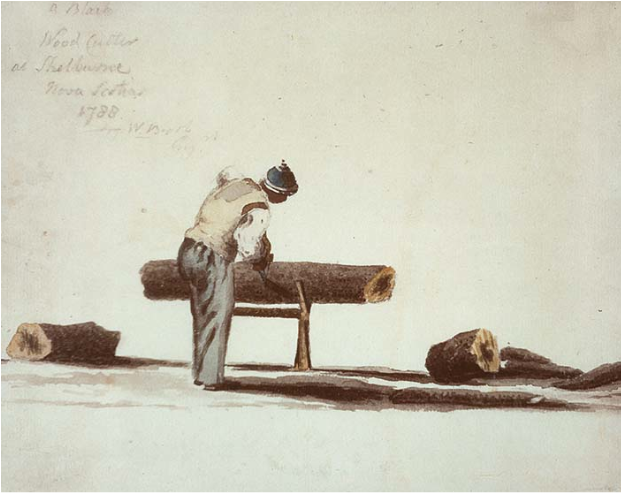
-
Article
Early Inuit (Thule) Winter House
The early Inuit (Thule) were an Indigenous people who began to occupy the Arctic, from Alaska to Greenland, around 1000 CE. In the winter, the early Inuit used a house built partially into the ground to keep them warm for long periods of time. One striking feature of this structure was the roof, which was sometimes made of whalebone. (See also Architectural History of Indigenous Peoples in Canada.)
"https://d3d0lqu00lnqvz.cloudfront.net/ThuleHouse.jpg" // resources/views/front/categories/view.blade.php
https://d3d0lqu00lnqvz.cloudfront.net/ThuleHouse.jpg
-
Article
Tilly Rolston
Tilly Jean Rolston, Canadian politician (born 23 February 1887 in Vancouver, BC; died 12 October 1953 in Vancouver, BC). Rolston was best known for her service as education minister for the province of British Columbia in the Social Credit government of W.A.C. Bennett in the early 1950s. She has the distinction of being the second woman cabinet minister elected in that province, but the first with a portfolio in all of Canada. Rolston was instrumental in developing a new financing formula for the funding of BC’s public schools, and also instituted the province’s first sex education curriculum. She is noted for being the first woman in British Columbia to receive a state funeral upon her death.
"https://d3d0lqu00lnqvz.cloudfront.net/TillyRolston/TillyRolston2_TweetOnly.jpg" // resources/views/front/categories/view.blade.php
https://d3d0lqu00lnqvz.cloudfront.net/TillyRolston/TillyRolston2_TweetOnly.jpg
-
Article
Tlicho (Dogrib)
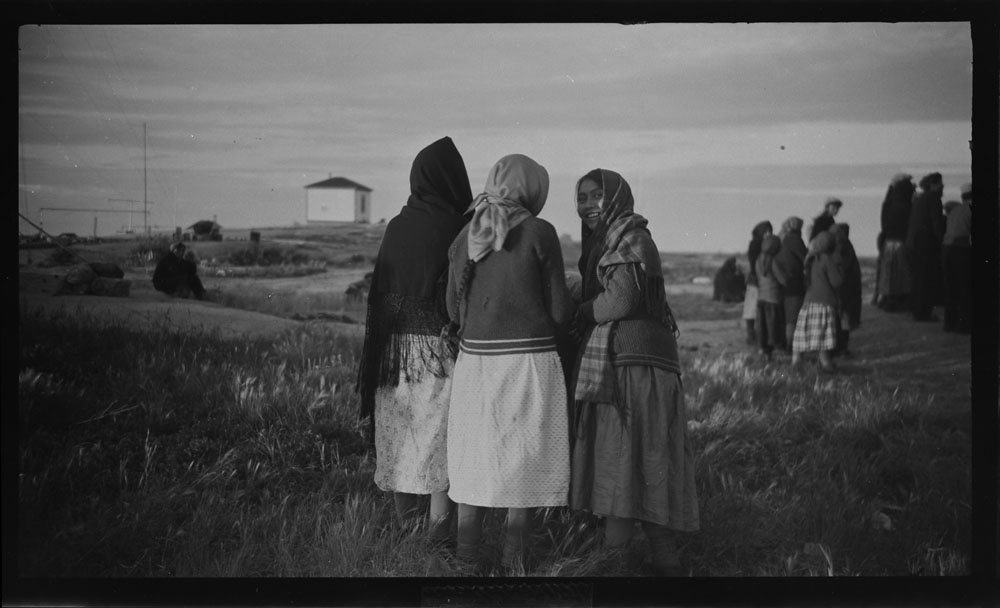
Tlicho (Tłı̨chǫ), also known as Dogrib, are an Indigenous people in Canada. They fall within the broader designation of Dene, who are Indigenous peoples of the widespread Athapaskan (or Athabascan) language family. Their name for themselves is Doné, meaning "the People." To distinguish themselves from their Dene neighbours, including the Denesuline, Slavey, Sahtu Got'ine and K'asho Got'ine, they have come to identify themselves as Tlicho, a Cree word meaning “dog's rib,” referring to a creation story. In 2005, the Tlicho Agreement, which saw the Tlicho gain control of 39,000 km2 of their traditional lands, became the first combined self-government agreement and comprehensive land claim in the Northwest Territories. According to the Northwest Territories Bureau of Statistics (2019), the population of the Tlicho region of the territory was 2,983.
"https://d3d0lqu00lnqvz.cloudfront.net/Tłı̨chǫ_girls-1.jpg" // resources/views/front/categories/view.blade.php
https://d3d0lqu00lnqvz.cloudfront.net/Tłı̨chǫ_girls-1.jpg