Share on Facebook
 Share on X
 Share by Email
 Share on Google Classroom
Probation and parole are functions of the criminal justice system. Probation is when convicted offenders are supervised in the community instead of in prison, or after a prison sentence has been served. Probation comes from a custom in Anglo-American courts to suspend judgment in certain cases and provide a second chance for offenders. Probation is a sentencing option available to a judge when an offender has committed certain crimes. Parole is the act of releasing an offender from custody under certain conditions. The purpose of parole is to manage the timing and conditions of a prisoner’s release to maintain a just, peaceful and safe society. Parole helps to rehabilitate and reintegrate an offender into the community as a law-abiding citizen.

Origins
The practice of probation started with John Augustus, a shoemaker in Boston, Massachusetts. Through his interest in the temperance cause, he agreed to supervise an offender in lieu of a prison term. By the time he died, Augustus had been responsible for nearly 2,000 offenders.
Parole was introduced in Canada toward the end of the 19th century as a “ticket-of-leave” program. It allowed some prisoners to be released from prison early. At the time, prison populations had sharply increased. Parole was used to keep young and first-time offenders from being exposed to the corruptive influences of prison. Releasing some inmates early also helped reduce the cost of keeping people incarcerated.
Probation in Canada
Probation is available to a judge as a sentencing option when an offender has committed certain crimes. In Canada, probation is a provincial jurisdiction. (See also Distribution of Powers.) Probation services exist in all provinces. They are responsible for preparing pre-sentence reports that focus on the accused's background. The reports may suggest that the offender make restitution to the victim. The offender could also perform some type of community service as part of their sentence. The report may recommend that the offender take treatment for alcohol or drug problems. It can also suggest that they accept counselling for mental health concerns or social skills.
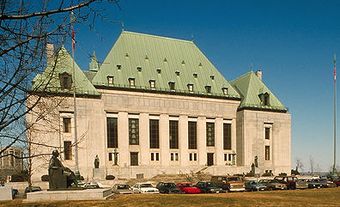
Pre-sentencing reports for Indigenous offenders must also consider Gladue factors. They were established in the Supreme Court of Canada’s 1999 R. v. Gladue decision. Gladue factors consider the impacts of colonialism, discrimination and racial policies like residential schools on an individual offender. These factors can also be presented in formal Gladue reports. They help determine an offender’s sentencing and probation conditions. (See also Rights of Indigenous Peoples in Canada.)
Experts on the legal and sociological aspects of law enforcement agree that probation is more effective than jail or prison. It is also a less expensive way to rehabilitate most offenders. However, relatively few countries follow the principles on which the success of probation depends. It requires careful selection of suitable cases, suspension of sentence for offenders on probation, supervision by trained personnel, and release of the probationer at the end of the specified time. Their release depends on satisfactory behaviour.
Process of Parole
Parole derives from the French parole d'honneur — “word of honour.” It means the pledge of a prisoner not to try to escape in return for conditional freedom. Parole is also called conditional release. It is a discretionary process, the function of an administrative board. (See also Administrative Law.)
The Parole Board of Canada (PBC; formerly the National Parole Board) reports to the minister of Public Safety. The Board operates under the authority of the Corrections and Conditional Release Act (CCRA). The Board reviews parole applications made by federal inmates and decides whether they are fit for conditional release. The Board also has jurisdiction over prisoners serving less than two years in provinces where no provincial parole board exists. The purpose of parole is to manage the timing and conditions of a prisoner’s release to maintain a just, peaceful and safe society. Parole helps to rehabilitate and reintegrate an offender into the community as a law-abiding citizen.
Under federal law, most offenders must be released using a form of parole called statutory release. This allows them to serve the last third of their sentence in the community under the supervision of Correctional Service Canada (CSC). Statutory release is not a decision of the Parole Board of Canada. It is a provision in law. However, if requested to do so by CSC, the PBC can impose conditions on that statutory release. Offenders may apply to the PBC for full parole after serving one-third of their sentence. Day parole can be applied for at different times in a prison sentence, depending on the length of the sentence.
Parole for the Crime of Murder
Capital punishment was banned in Canada in 1976. That year, the law was changed to provide mandatory life imprisonment for first- and second-degree murder. Those convicted of first-degree murder are ineligible for parole until 25 years have been served. For those convicted by a jury of second-degree murder, the judge, at the time of sentencing, must ask the jury if it has any recommendations for the number of years an offender must serve before he or she is eligible for parole. The jury is not required to make a recommendation. But if it does, it must be no fewer than 10 years and no more than 25 years.
Normally, a person convicted of second-degree murder must serve at least 10 years before they are eligible for parole. Individuals convicted of multiple homicides or previously convicted of murder, or who have been previously convicted of crimes against humanity or war crimes that involved intentional killing, are typically not eligible for parole until they have served at least 25 years. Also, they cannot apply for judicial review during the parole ineligibility period.
In a 2022 ruling, R. v. Bissonnette, the Supreme Court of Canada ruled that someone serving sentences for multiple murders had to be eligible for parole after 25 years. This decision overturned a practice that had been allowed under section 745.51 of the Criminal Code. Under it, the parole ineligibility period for each sentence was served consecutively. Under section 745.51, someone convicted of more than one murder might never be eligible for parole in their lifetime. The Supreme Court deemed this unconstitutional. If released, offenders serving a life sentence are on parole supervision for the rest of their lives.
Criteria
The criteria for granting parole include an assessment of whether the prisoner will present an undue risk to society while on parole. It also assesses whether the release of the prisoner will help protect society once they are reintegrated into the community. The board looks at the prisoner's post-release plans, the seriousness of their criminal record and their behaviour in prison. They also consider any other information provided by psychologists or psychiatrists, courts, the police and victims.
For Indigenous prisoners, the board must also consider Gladue factors (discussed above). However, Bill C-83, passed in 2019, affirms that Gladue factors can only be used to assess the needs of Indigenous prisoners. They may not be used to support harsher measures or increased restrictions.
Bill C-83 made further changes that affected parole in Canada. The bill required the PBC to balance rehabilitation and reintegration with the protection of public safety by imposing the “least restrictive” measures on an offender after they are released. It also changed PBC regulations to allow victims to hear audio recordings of parole hearings. This made the hearings more accessible to them. The bill also eliminated the use of solitary confinement in Canada’s prisons. It was replaced with structured intervention units (SIUs) to improve post-prison outcomes for offenders. (Studies have shown, however, that solitary confinement is still used in some prisons.)
Supervision
Supervision of parolees is entrusted to federal or provincial correctional services. There are also private-sector agencies that work under contract to Correctional Service Canada. They include the John Howard Society, the Salvation Army, and the Canadian Association of Elizabeth Fry Societies. Halfway houses are utilized as an intermediate step between prison and freedom. They are particularly used by those on day parole. Electronic monitoring (EM), such as GPS ankle bracelets, has increasingly been used to supervise parolees. However, the use of EM varies greatly from province to province.
Indigenous communities also play a role in parole and community reintegration. Under sections 81 and 84 of the CCRA, Indigenous governments or organizations can manage the care, custody and conditional release of Indigenous (and some non-Indigenous) people. Healing lodges, release plans coordinated with Indigenous communities or organizations, and Indigenous-operated halfway houses are some examples of Indigenous involvement in rehabilitation and conditional release.
Changes and Innovations
The COVID-19 pandemic affected how parole was regulated and managed in Canada. For example, during the pandemic, the PBC and CSC streamlined releases for many “eligible, non-violent, lower risk” prisoners. The purpose was to reduce the number of incarcerated people and mitigate risks of infection in the prison population. Parolees were also increasingly sent home rather than to halfway houses to limit the chances of infection in group settings.
Some changes made during the pandemic remain in effect. In particular, the use of remote hearings increased during the pandemic to reduce transmission. Their use remains high, suggesting that this innovation will likely remain an important part of the parole board’s procedures in the future.
(See also Criminal Law; Criminal Procedure; Criminal Code of Canada.)