Share on Facebook
 Share on X
 Share by Email
 Share on Google Classroom
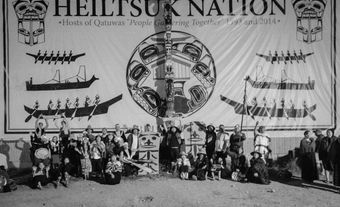
In R. v. Gladstone (1996), the Supreme Court of Canada recognized the Heiltsuk Nation’s constitutional right to commercially sell herring spawn on kelp. The Supreme Court overturned Donald and William Gladstone’s convictions related to the sale of herring spawn on kelp without the proper license. Additionally, the Supreme Court ordered a new trial to determine if government infringement of this constitutional right was justified (see also Constitutional Law). This was the first Supreme Court ruling that affirmed commercial harvesting rights under s. 35 of the Constitution Act, 1982. The decision empowered Indigenous economic activity. It also clarified limits on justifiable infringement by the government.

Background
In 1793, Alexander Mackenzie, the first European to cross North America over land, arrived at the Pacific Ocean in the territory of the Heiltsuk First Nation. In his journal, he remarked on the trade in fish spawn between Indigenous peoples along the coast.
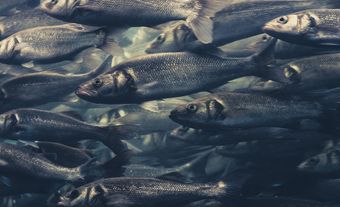
On 27 April 1988, Donald and William Gladstone shipped 4,200 pounds of herring spawn on kelp from Bella Bella to Richmond, British Columbia. As members of the Heiltsuk First Nation, they were descendants of the traders that Alexander Mackenzie described. The following day, they approached a buyer for the purposes of selling their catch. As they were leaving the buyer’s store, they were arrested by fisheries officers. The entire 4,200 pounds of herring spawn on kelp was seized. William Gladstone, at the time of the arrest, produced an Indian food fishing license. It permitted him to harvest 500 pounds of herring spawn on kelp. Both Gladstones were charged under various regulations, including s. 20(3) of the Pacific Herring Fishery Regulations for not having the proper license to collect herring spawn.

Early Legal Battles
At trial in British Columbia Provincial Court, the two men argued that their attempted sale of the herring spawn on kelp was in accordance with their Aboriginal rights (see also Rights of Indigenous Peoples in Canada). These rights were recognized and affirmed by s. 35(1) of the Constitution Act, 1982. The trial judge, applying the legal test set out in R. v. Sparrow (1990), accepted that they had an Aboriginal right to sell the herring spawn on kelp. However, they were convicted on the basis that their right to sell herring spawn on kelp was justifiably infringed by the regulations.
The two men appealed their convictions to the BC Supreme Court but were unsuccessful. They further appealed to the BC Court of Appeal. The court upheld their convictions for the same reasons as the trial judge. The two men decided to appeal the decision of the BC Court of Appeal to the Supreme Court of Canada. On 27–29 November 1995, their appeal was heard before a panel of nine judges. The question before the Supreme Court was whether the Heiltsuk had a constitutionally protected right to commercially sell herring spawn on kelp.
Supreme Court of Canada Decision
In an 8–1 decision, the Supreme Court of Canada ruled that the appeals of Donald and William Gladstone should be allowed. The ruling stated that they had a protected Aboriginal right to commercially sell herring spawn on kelp (see also Rights of Indigenous Peoples in Canada). It also called for a new trial to address their guilt or innocence. The new trial would also determine whether the government could justify its infringement of that Aboriginal right under the Pacific Herring Fishery Regulation.
The Court arrived at this conclusion by applying the legal principles set out in R. v. Van der Peet (1996) — heard at the same time as R. v. Gladstone — and R. v. Sparrow (1990). The Court first determined that the Heiltsuk have an Aboriginal right to sell herring spawn on kelp on the commercial market. Historical evidence demonstrated that the commercial sale of herring spawn on kelp was a central, significant and defining feature of the culture of the Heiltsuk. The Court then applied the first part of the Sparrow legal test. It determined that the Heiltsuk’s Aboriginal right to sell herring spawn on kelp commercially had not been extinguished by provincial or federal regulations.
Subsequently, the Court addressed the remaining two parts of the Sparrow test. It looked to whether Donald and William Gladstone’s Aboriginal right had been infringed and, if so, whether the government could justify that infringement. The Court was emphatic that the Heiltsuk’s right had been infringed. The Court wrote it was evident that the Heiltsuk had, before the arrival of Europeans, harvested herring spawn as they desired and without limitation. Therefore, there was little doubt that the limitations imposed under the Pacific Herring Fishery Regulation were an infringement of that right.
Finally, the Court stated that there was insufficient evidence available before them to determine whether the government was justified in infringing on the Heiltsuk’s Aboriginal right. The court ordered a new trial. However, the Court did provide guidance to help determine what constitutes justification at the new trial. More specifically, the Court expanded the government’s grounds for justification under the Sparrow test. It reasoned that because the right to sell herring spawn on kelp was a commercial right, there must be a balancing with the right of non-Indigenous people to fish commercially. Additionally, the Court determined that government need not give exclusive priority to Indigenous interests. Nonetheless, the Court still required the Crown to show priority. This priority would be in the form of proportional distribution of the resource, compensation in cases of expropriation and consultation over distribution.
Impact
For Donald and William Gladstone, and for the Heiltsuk, the Supreme Court’s decision meant that their practice of harvesting and commercially selling herring spawn could continue. It recognized that it was a protected right under s. 35 of the Constitution Act, 1982. This constitutional protection has granted legality and support to the Heiltsuk’s ongoing maintenance and conservation of their herring spawn fishery. This is exemplified by the Heiltsuk’s decision to pause the herring spawn fishery for seven years between 2008 and 2015 over concerns of over-harvesting. In 2024, the Heiltsuk exercised this right through legal action against the federal government for its decision to place a ban on the herring spawn fishery.
More broadly, the decision in Gladstone has generally understood to be a major victory for Indigenous peoples. It was the first decision by the Supreme Court of Canada to recognize that Indigenous peoples have, in certain cases, the right to commercially sell harvested food. However, the Court’s expansion of the reasons that government may give to justify infringing on Aboriginal rights has been criticized by some legal scholars who argue the Court embraced the “public interest” test that it initially rejected in the Sparrow case.